
Culverts
We provide clients with culverts that create roads underground
In the world of infrastructure and road construction, it is important to consider effective solutions to manage water flows, traffic and environmental protection. Culverts and culverting are two concepts that often come to the fore when it comes to creating smooth passages for water and traffic, and they play a crucial role in preventing flooding and facilitating safe passage.
Culverts are underground tunnels or pipes used to carry water, roads or railways under obstacles such as roads, railways or other types of infrastructure. These culverts allow water flows to pass smoothly and for traffic to continue unhindered above ground. Culverts are a key ingredient in the culverting process and come in varying shapes and sizes depending on the needs of the project.
Corrugated Steel Pipe: The Engineering Standard for Modern Culverts
Corrugated steel pipe has been the material of choice for culvert construction across the UK’s road and rail networks for over a century. The corrugated profile gives the pipe exceptional structural strength relative to its weight, allowing it to support heavy traffic loads whilst remaining significantly lighter and faster to install than precast concrete alternatives.
ViaCon’s HelCor corrugated steel pipes are available in diameters from 300mm to 3,600mm, making them suitable for everything from minor watercourse crossings to major highway drainage culverts. The galvanised steel construction provides long-term corrosion protection with a design life exceeding 100 years, while the smooth or corrugated invert options allow hydraulic performance to be optimised for each application.
Why Corrugated Steel Culverts Outperform Concrete
For engineers specifying culvert pipe solutions, corrugated steel offers measurable advantages over precast concrete in most applications. Installation is typically 25–50% faster because the lightweight sections can be handled with standard site plant — eliminating the need for heavy-lift cranes required for precast concrete units. The flexible steel structure also accommodates differential settlement without cracking, making it particularly suited to sites with variable or poor ground conditions.
From a sustainability perspective, steel culverts deliver up to 70% lower CO₂e emissions compared to equivalent concrete structures, and the material is 100% recyclable at end of life. For projects where sustainability credentials contribute to planning approval or BREEAM assessment, this lifecycle advantage is significant. Read more about why steel is the smarter choice for infrastructure.
Culvert Applications Across UK Infrastructure
ViaCon’s culvert solutions serve a broad range of infrastructure requirements across the UK. Our ViaPlate systems handle larger span requirements for road and rail crossings, while HelCor pipes are the standard specification for watercourse culverts, pedestrian and wildlife underpasses, and stormwater conveyance. For projects requiring custom profiles or multi-cell installations, our flexible steel culvert solutions provide bespoke engineering to match site-specific constraints.
Our engineering team provides full technical support including hydraulic calculations, structural design to Eurocode standards, and installation guidance. Contact us for a project-specific quotation.
Areas of application
Water bridges and culverts, road and railway viaducts, wildlife passages, pedestrian tunnels, etc.
Competitive advantages
Overall cost advantage over concrete solutions in several applications, e.g. small water bridges and culverts, ecological crossings, pedestrian tunnels, railway crossings, etc.
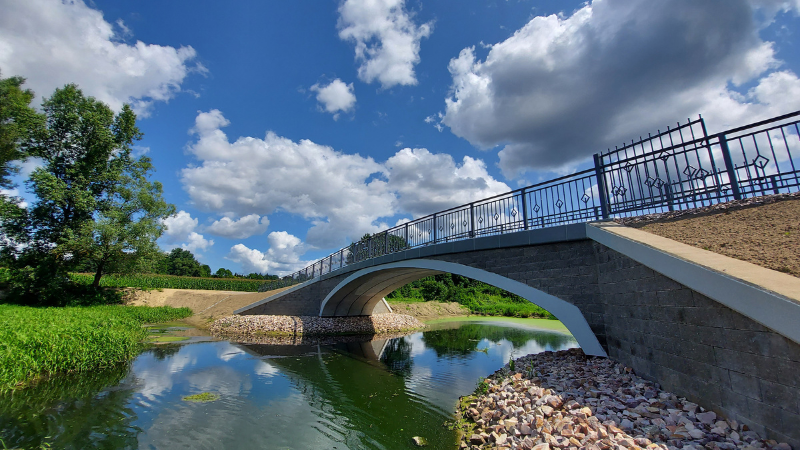
Culverting for efficient flow management
Culverting is the process of creating these underground passages or culverts. It is a construction technique used to prevent flooding and allow the smooth passage of water flows under roads, railways or other obstacles. Culverting is important to ensure that water flows can cross these obstacles in a controlled way and that traffic can continue smoothly.
How culverts are used in practice
Water management
Culverts are often used to divert water from rain, streams or drainage systems under roads and railways. They prevent flooding and minimise damage to the road surface.
Road and railway crossings
At road and railway crossings, culverts allow safe passage for vehicles and trains. They ensure that traffic does not affect the railway or road structure.
Environmental protection
Culverts and culverting are also used to promote environmental protection by allowing wildlife to cross roads and railways safely. Ecoducts and ecological passages are examples of this.
Maintenance and longevity
Once installed, culverts usually require minimal maintenance. They are designed to be durable and can have a lifespan of many decades.
In summary, culverts and culverting are essential to modern infrastructure and drainage systems. They enable the safe passage of water, traffic and wildlife and are essential components of construction projects that require smooth flow management and flood protection.
The choice of the right type of culvert and its proper installation is crucial to ensure their effectiveness and durability. So the next time you drive over a bridge or see a road crossing, think about the underground passages that make it possible.
Contact your local ViaCon representative
A culvert is an underground tunnel or pipe designed to carry water under an obstacle, such as a road, railway, or embankment. Think of it as a crucial “bridge for water.” Its primary purpose is twofold: first, to allow natural watercourses like streams or stormwater runoff to pass through smoothly, preventing flooding and erosion. Second, it must simultaneously support the weight and traffic of the infrastructure built directly above it.
While their main function is water management, these structures, often made from durable materials like steel or concrete, are also fundamental in creating other types of passages, such as safe crossings for wildlife (ecoducts) or pedestrian underpasses. In essence, a culvert is a fundamental component of modern infrastructure that ensures both natural environmental flows and human transportation can coexist safely and efficiently.
Culverts are highly versatile and used in many types of infrastructure projects, including:
-
Water wanagement: Diverting streams, rivers, and rainwater under roads to prevent flooding.
-
Transport crossings: Creating passages for roads and railways (viaducts).
-
Wildlife passages: Allowing animals to safely cross under busy transport routes through underground passages.
-
Pedestrian tunnels: Providing safe crossings for people.
The main benefits include:
-
Flood prevention: They effectively manage water flows to protect infrastructure and surrounding areas.
-
Uninterrupted traffic flow: They ensure roads and railways remain operational and safe.
-
Durability and low maintenance: They are designed for a very long lifespan (many decades) with minimal maintenance requirements.
-
Cost-effectiveness: They offer a significant overall cost advantage compared to concrete solutions in many applications.
Culverts play a crucial role in environmental protection by functioning as wildlife passages or ecoducts. These allow animals to safely cross under roads and railways, which helps to preserve natural habitats, reduce wildlife-vehicle collisions, and maintain ecological connectivity.
A culvert is the physical structure (the tunnel or pipe). Culverting is the construction process of creating these underground passages to manage the flow of water and traffic.
ViaCon’s culverts provide a competitive advantage through a combination of factors. They offer a significant overall cost advantage compared to traditional concrete solutions in applications like small water bridges, wildlife passages, and pedestrian tunnels. Furthermore, they are engineered for durability and a long lifespan with very low maintenance, making them a smart and economical long-term investment.
In essence, the meaning of a culvert is a structure that forms a tunnel to convey water underneath an obstacle. Its purpose is to solve a fundamental infrastructure challenge: allowing a stream or stormwater to flow from one side of a road or railway to the other without interrupting traffic. The term implies a solution that handles both drainage and supports the load above it.
The primary function of a drainage culvert is to provide a controlled channel for water to flow underneath an obstacle. This is crucial for managing stormwater runoff from paved areas, or for allowing natural streams and small rivers to pass underneath roads, railways, and embankments. By efficiently conveying water from one side to the other, a drainage culvert prevents water from pooling, which protects the structural integrity of the infrastructure above and mitigates the risk of flooding and erosion in the surrounding area.
A corrugated steel culvert pipe is a structural drainage pipe manufactured from galvanised steel sheet formed into a corrugated profile. The corrugations give the pipe significantly greater strength than a smooth-wall pipe of the same thickness, enabling it to support heavy traffic loads when buried beneath roads and railways. ViaCon’s HelCor range of corrugated steel culvert pipes is available in diameters from 300mm to 3,600mm and is widely specified across UK infrastructure projects for watercourse crossings, stormwater conveyance, and underground passages.
ViaCon’s galvanised corrugated steel culverts are engineered for a design life exceeding 100 years. The hot-dip galvanisation process provides a zinc coating that protects the steel from corrosion. In aggressive soil or water conditions, additional protection measures such as polymer coatings or increased steel thickness can extend the service life further. This long design life makes steel culverts a cost-effective alternative to concrete, which can suffer from reinforcement corrosion and joint deterioration over shorter timescales.