
Geomats
Geomats decrease erosion and increase vegetation
Geomats are polymer fiber products used widely to protect vulnerable slopes from erosion and to encourage vegetation. They are a good solution for the soils suffering from the degrading impact of rain, drain water, wind and waves. They are made of water-permeable synthetic materials such as polyethylene or polypropylene. There is also an option of biodegradable geomats made of biodegradable fibres such as coir and straw – they are called biomats.
Thorough protection
Localized breaks in the grass and bush cover root system often lead to erosion. Geomats protect bare soils from this and ensure rapid re-vegetation. They create a stable surface that is highly resistant to the erosive effects of water and wind.
High effectiveness
When installed before the erosion process starts, geomats reduce the amount of eroded soil by over 50% compared to unprotected banks.
Suitable for harsh conditions
The reinforced geomats allow the retention of a thick surface soil layer even on very steep non-water permeable slopes (for example, stabilization of surface layers in re-cultivation of landfills).
Easy installation
They are light and easy to handle. Place the geomat on the ground at the beginning of the project and roll it up when the vegetation is cultivated. You can roll it up all at once or in separate blocks.
Strength & durability
With high tensile strength, geomats can withstand heavy water flows of up to 4 m/s. This way, they can prevent the displacement of small or large soil particles. Geomats are long-lasting polymeric structures. Their layers are connected using thermal technology, which prolongs their service life and increases weather resistance.
Environmentally friendly
They are reusable and extract no dangerous substances to the surrounding environment, so they are toxin-free and eco-friendly.
Geomats for Erosion Control: Permanent and Biodegradable Solutions
Geomats are three-dimensional erosion control products manufactured from polymer filaments or natural fibres, designed to protect soil surfaces from water and wind erosion while promoting vegetation establishment. Unlike two-dimensional geotextiles, a geomat’s open 3D structure traps soil particles and seeds, creating a reinforced root zone that anchors vegetation permanently into the slope. Once vegetation is established, the combined geomat-root matrix provides long-term erosion resistance far exceeding that of grass alone.
ViaCon supplies both permanent polymer geomats (typically polyamide or polypropylene, designed for 50+ year service life) and biodegradable geomats (coir, jute or straw-based products that degrade naturally over 2–5 years as vegetation takes over). Both types are specified to BS 8002, the CIRIA guidance on slope stabilisation, and DMRB HA 205 for highway earthworks. Our technical team can recommend the most appropriate geomat type based on slope gradient, soil type, rainfall intensity and vegetation objectives.
Geomat Applications: Slopes, Channels and Coastal Embankments
On highway and railway earthworks, geomats protect newly formed cuttings and embankment slopes from surface erosion during the critical vegetation establishment period. They are routinely specified by National Highways, Network Rail and local authorities for slopes steeper than 1:2 where conventional grass seeding alone cannot resist rainfall erosion. For channel lining applications, geomats reinforce turf to withstand intermittent flow velocities — providing a vegetated alternative to concrete or rip-rap lining on low-flow drainage channels and swales.
In coastal and river engineering, geomats protect embankment faces, levee slopes and flood defence bunds from wave action and tidal erosion. Combined with gabion toe structures and geotextile filter layers, geomats form part of integrated erosion protection systems that deliver both structural performance and ecological benefit. For sites requiring soil reinforcement as well as erosion protection, geomats can be used in conjunction with geogrids to stabilise steeper slopes.
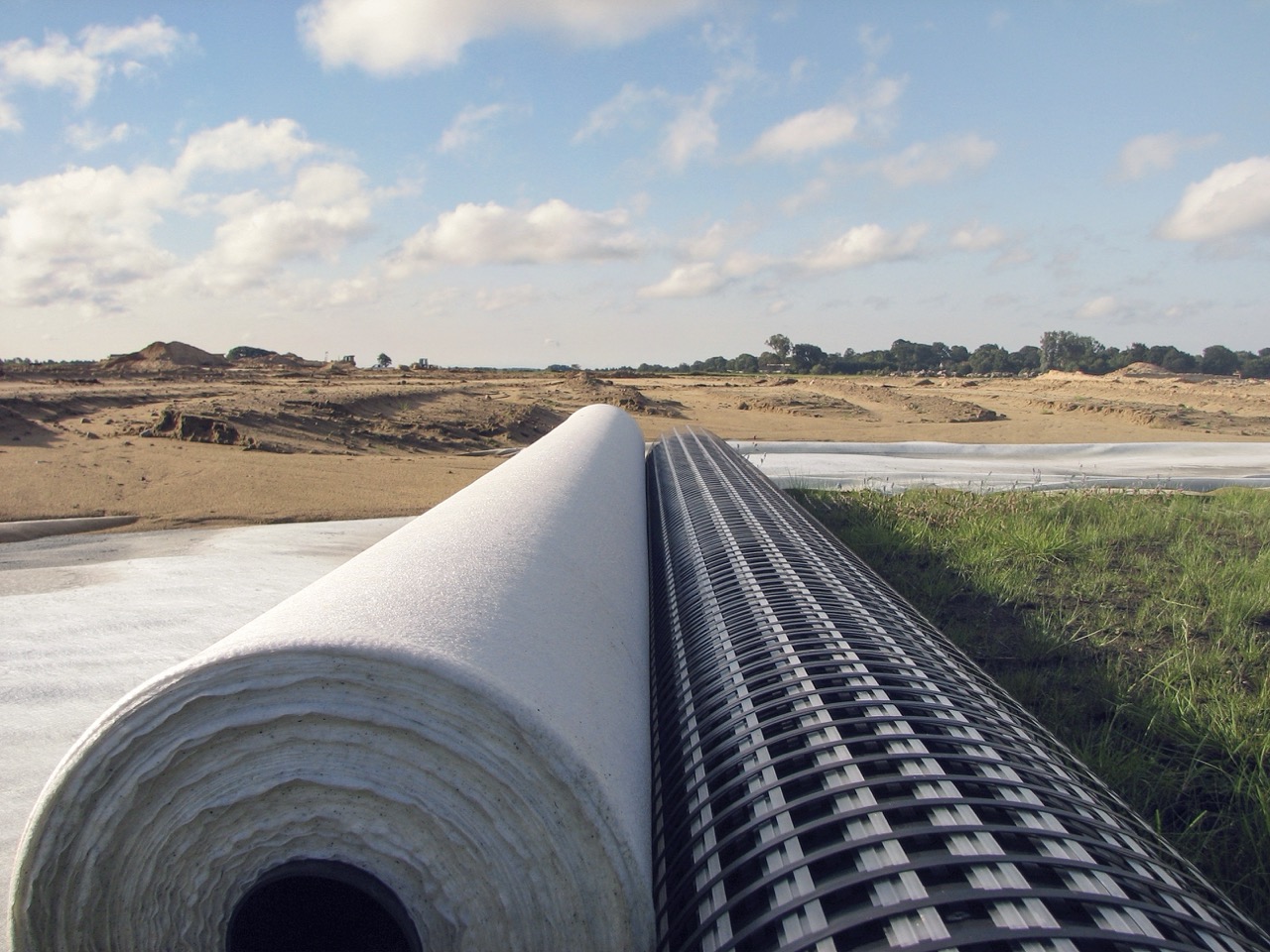
Applications:
- Slopes to be covered with vegetation
- Slopes of trenches and canals
- Banks of canals, ponds and artificial reservoirs, as well as covering for landfills
- Rock fall protection
- Reinforcement of riverside land or coastline
- Protection from landslides and hydro-erosion, especially near roadside constructions
Steel: The smarter choice
The strength and sustainability of steel provides durability and lifespan advantages for construction projects.
Value engineering
With consultative problem solving and the versatility of steel, value engineering ensures adaptable, cost-effective solutions.
Case studies
Discover the full range of real-world implementations and sustainability benefits of ViaCon solutions and expertise.
Welcome to the ViaCon design toolkit
We have put together a selection of useful tools, calculators, information and downloadable resources to help you find what you need quickly and get the most out of your ViaCon system.
A geomat is used to prevent soil erosion on slopes, embankments, channels and coastal structures. Its three-dimensional open structure traps soil particles and seeds, creating a reinforced root zone that anchors vegetation into the slope surface. Geomats are specified on highway cuttings, railway embankments, flood defence bunds, river banks, drainage swales and any other earthwork where surface erosion must be controlled during and after vegetation establishment. They are commonly used alongside other geosynthetic products such as geotextiles and geogrids in integrated erosion protection systems.
A geomat is a three-dimensional erosion control product designed to reinforce vegetation on slopes — it sits on the soil surface and promotes root growth through its open structure. A geotextile is a flat, permeable fabric used within the ground to separate soil layers, filter water, provide drainage or protect other materials from puncture damage. While both are geosynthetic products, they serve different primary functions: geomats control surface erosion, whereas geotextiles manage subsurface separation and filtration. In many projects, the two products work together — for example, a geotextile filter layer beneath gabion rip-rap with a geomat on the upper slope face above.