
Geosynthetic Clay Liners (GCL)
What Is a Geosynthetic Clay Liner (GCL)?
A geosynthetic clay liner (GCL) is a factory-manufactured hydraulic barrier consisting of a layer of sodium bentonite clay encapsulated between two geotextile layers — typically a woven geotextile base and a non-woven geotextile cover, bonded by needle-punching or stitching. When hydrated, the bentonite swells to form an extremely low-permeability barrier (hydraulic conductivity typically ≤5×10⁻¹¹ m/s), providing containment performance comparable to 600mm of compacted clay in a product just 6–10mm thick.
GCLs are specified to BS EN 13361, BS EN 13362 and BS EN 14150, and are widely used across the UK for landfill lining, contaminated land capping, water feature construction, secondary containment and sustainable drainage systems (SuDS). A key advantage of GCL technology is the self-healing property of sodium bentonite — minor punctures or perforations seal themselves as the bentonite swells on contact with water, providing a robust and forgiving containment solution.
GCL vs Geomembrane: When to Use Each Containment Solution
Both GCLs and geomembranes (HDPE, LLDPE or PVC liners) provide low-permeability barriers, but they differ significantly in installation, cost, performance and suitability for different applications. GCLs are delivered in rolls and installed by simple overlap — no specialist welding equipment is needed, reducing installation time and cost by up to 50% compared with geomembrane systems. GCLs also conform readily to irregular subgrades, making them ideal for projects with complex geometry or limited working space.
Geomembranes offer zero permeability and superior chemical resistance, making them the preferred choice for aggressive leachate containment and chemical storage. In many modern landfill and contaminated land projects, GCLs and geomembranes are used together as a composite lining system — the GCL provides a secondary barrier and leak detection layer beneath the primary geomembrane. ViaCon’s technical team can advise on the most appropriate containment strategy for your project, whether GCL-only, geomembrane-only or composite systems.
GCL Applications: Landfill, Contaminated Land and Water Features
In landfill engineering, GCLs are specified as basal liners, side slope liners and capping layers in accordance with the Environment Agency’s EPR guidance. Their flexibility and self-healing properties make them particularly suited to capping applications where differential settlement is expected. For contaminated land remediation, GCLs provide cover systems that prevent rainwater infiltration into contaminated soils, reducing leachate generation and protecting groundwater resources.
Beyond waste management, GCLs are increasingly specified for decorative lakes, irrigation reservoirs, canal linings and SuDS attenuation features where a simple, cost-effective waterproofing solution is required. Combined with non-woven geotextile protection layers and geogrid-reinforced capping systems, ViaCon provides complete geosynthetic containment solutions from a single source.
GCLs provide an effective hydraulic seal
Geobarriers or Geosynthetic Clay Liners (GCLs) are geosynthetic barriers widely used for sealing and containment applications. They are made of one needle-punched geotextile layer and one woven textile layer with a layer of highly waterproof sodium bentonite in between. They are known for their low permeability, high performance, and the ability to self-heal.
Extremely low permeability
GCLs are an effective barrier against liquids, vapours, and gases. GCL permeability is significantly lower than that of a typical compacted clay liner. In combination with geomembranes, it makes a practically impervious solution.
Self-restoration
Sodium bentonite is a natural clay that easily binds with water. It can swell up to 10 times its original volume. This enables it to self-heal any damages and punctures, and self-seam at the overlaps.
Easy to install
Installation is done using a spreader bar, which saves labour costs. No specialized crew is needed to handle the product. Your regular contractor can install GCL with conventional instruments following the installation guide.
Consistent performance
As opposed to compacted clay liners, GCL’s performance does not decrease because of cold, humidity or varying temperatures. There will be no cracks or leakage, and any damage will always be self-healed by swelling sodium bentonite.
Minimal maintenance
CLs do not require maintenance in normal conditions and have a service life of over 100 years. If you are expecting them to come in contact with contaminated soils or water, you should consider strengthening the solution with geomembranes.
Economical and eco-friendly
GCL’s carbon footprint is much lower than that of massive clay liners. You will require 150 times more compacted clay than GCLs for the same job. Transportation and installation are less resource-consuming and more cost-effective.
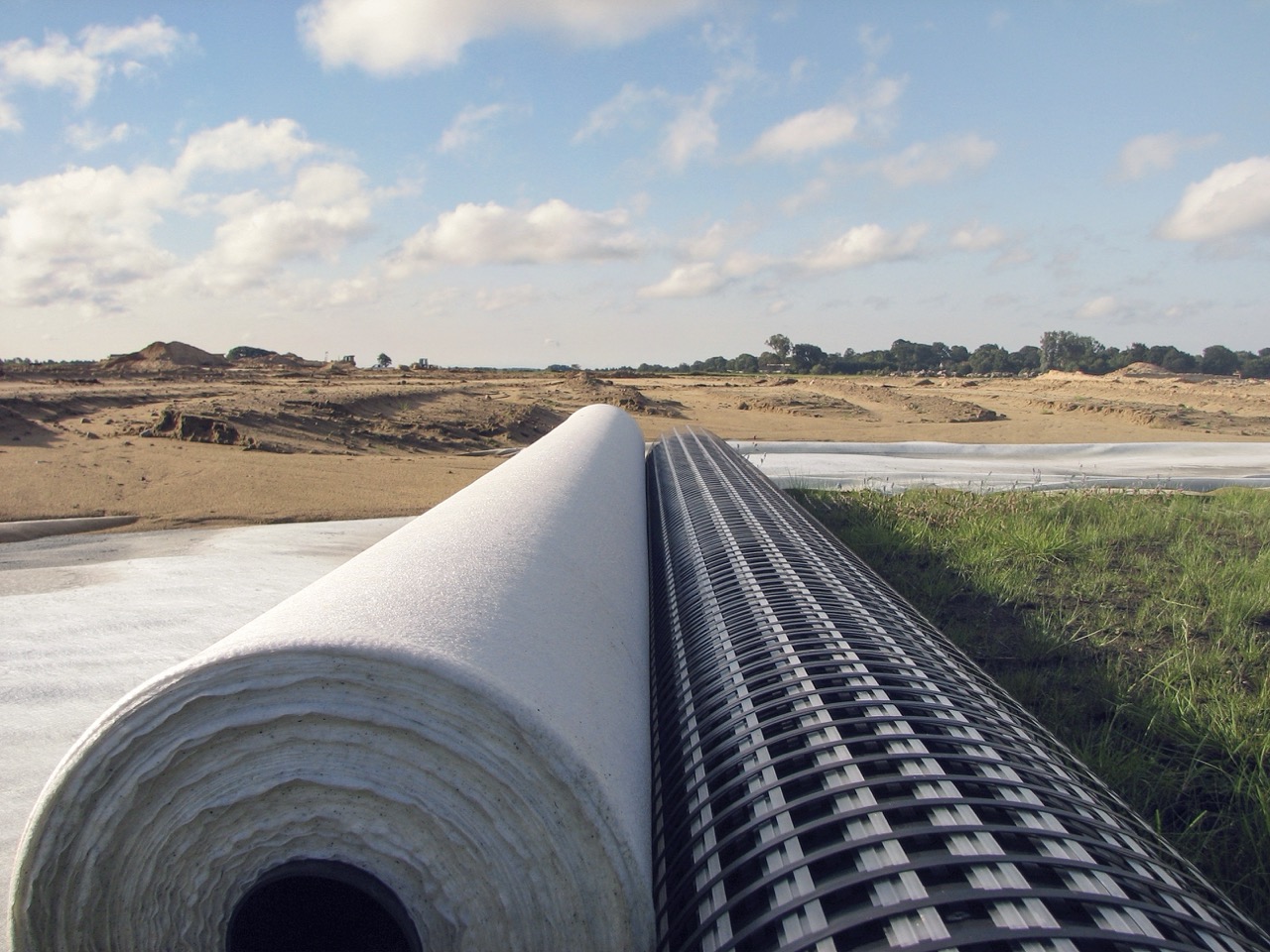
Applications:
- Canals, stormwater impoundments and wetlands
- Ground water protection
- Structural waterproofing
- Secondary containment
- Landfill liners and cappings
- Mining
- Ponds
- Structural waterproofing
Steel: The smarter choice
The strength and sustainability of steel provides durability and lifespan advantages for construction projects.
Value engineering
With consultative problem solving and the versatility of steel, value engineering ensures adaptable, cost-effective solutions.
Case studies
Discover the full range of real-world implementations and sustainability benefits of ViaCon solutions and expertise.
Welcome to the ViaCon design toolkit
We have put together a selection of useful tools, calculators, information and downloadable resources to help you find what you need quickly and get the most out of your ViaCon system.
A geosynthetic clay liner (GCL) is a manufactured waterproofing product consisting of sodium bentonite clay sandwiched between two geotextile layers. When the bentonite absorbs water it swells to form an extremely low-permeability barrier, providing containment equivalent to approximately 600mm of compacted clay in a product just 6–10mm thick. GCLs are used for landfill lining, contaminated land capping, pond and lake construction, canal lining, secondary containment and SuDS features.
Geomembranes are smooth plastic sheets (typically HDPE or LLDPE) that provide a completely impermeable barrier but require specialist heat welding for installation. GCLs use natural bentonite clay to achieve very low permeability and are installed by simple overlapping — no welding needed, which reduces installation time and cost. GCLs also self-heal minor punctures as the bentonite swells, while geomembrane damage requires patch repair. In high-risk containment applications, the two products are often used together as a composite system for maximum protection.
GCLs are designed for a minimum service life of 100+ years when correctly specified and installed. The sodium bentonite clay is a naturally occurring mineral that does not degrade over time, and the encapsulating geotextiles are manufactured from UV-stabilised polypropylene designed to resist biological and chemical degradation once buried. Long-term performance depends on appropriate specification for the site conditions — ViaCon can provide project-specific durability assessments and design life verification.